What Is EAA? A Simple Guide to the European Accessibility Act
Understanding the abbreviation
If you've come across the abbreviation EAA and wondered what it means, you're not alone. This guide explains what EAA stands for, why the term is widely used and how it relates to the European Accessibility Act, helping you understand why accessibility has become such an important consideration for organisations across Europe and beyond.
Introduction
If you've searched for what is EAA, there's a good chance you've recently encountered the abbreviation while reading about accessibility, digital services or new legal requirements affecting organisations across Europe.
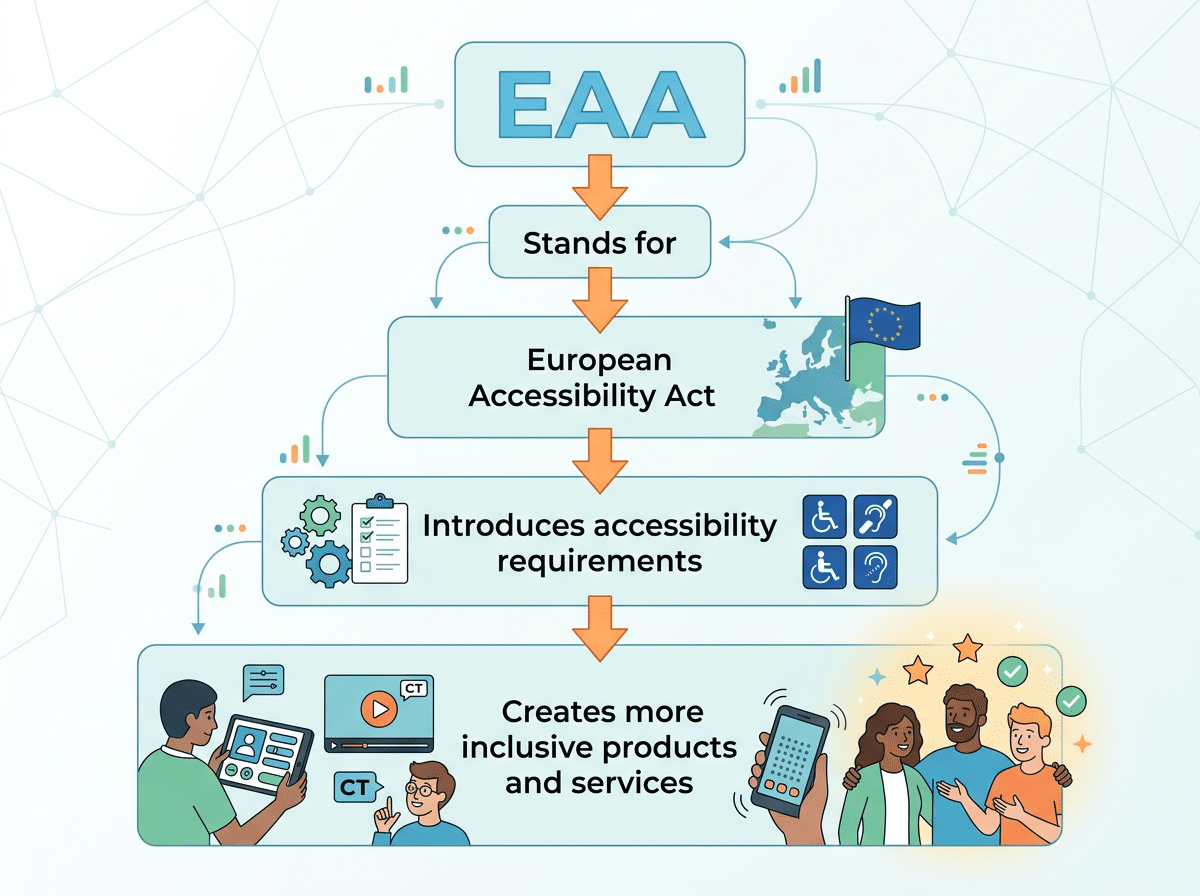
EAA stands for the European Accessibility Act, a piece of legislation introduced to improve the accessibility of a wide range of products and services. While the full name is used in official publications, many organisations, accessibility professionals and technology providers simply refer to it as EAA during everyday conversations.
The abbreviation has become increasingly common because it is shorter, easier to remember and widely recognised within the accessibility community. As awareness of the legislation has grown, so too has the use of EAA across articles, guidance documents, conferences and professional discussions.
If you're unfamiliar with the legislation itself, our guide to the European Act explains the law in more detail. You may also come across the term EU Accessibility Act, which is another commonly used way of referring to the same legislation. Finally, if you're interested in the practical side of implementing accessibility, our guide to EAA Accessibility explains how organisations apply accessibility throughout the design, development and testing of digital products and services.
Understanding what EAA means is often the first step towards understanding accessibility requirements and why they are becoming increasingly important for organisations that provide products and services to customers across Europe.
What Does It Stand For?
EAA is the abbreviation used for the legislation designed to improve the accessibility of products and services used by people across the European Union. Although the official title appears in legal documents and government publications, the abbreviation has become the most common way of referring to it in everyday conversations.
Using abbreviations is common for major legislation and technical standards. Just as organisations often refer to WCAG instead of the Web Content Accessibility Guidelines, many people simply use EAA when discussing accessibility requirements, guidance and implementation.
The abbreviation does not represent a different law or a separate initiative. Whenever someone refers to EAA in the context of digital accessibility, they are almost always referring to the same legislation.
For this reason, you'll often see EAA used in articles, webinars, accessibility conferences, training courses and technical documentation. Understanding the abbreviation makes it much easier to follow discussions and recognise that everyone is talking about the same legislation.
Why Is the Abbreviation Used?
The main reason the abbreviation is used is simplicity. The official title is relatively long, particularly when it appears repeatedly throughout guidance documents or technical discussions. Using EAA makes communication quicker while still referring to exactly the same legislation.
As the legislation has become more widely recognised, the abbreviation has become part of the everyday language used by accessibility professionals, software developers, consultants and organisations responsible for digital products and services.
It is also increasingly common in online searches. Many people who are introduced to the legislation through colleagues, webinars or industry events hear the abbreviation before they know what it stands for. This explains why searches such as "What is EAA?" have become more frequent as awareness of accessibility continues to grow.
Why Has It Become So Common?
Although the legislation has existed for several years, the abbreviation EAA has become much more widely recognised as organisations have focused on improving accessibility. As awareness of accessibility has increased, the abbreviation has appeared more frequently in guidance documents, webinars, industry events and professional discussions.
Today, many organisations use EAA as a convenient shorthand when discussing accessibility strategies, digital transformation projects and inclusive design. It is often quicker to say or write "EAA" than repeat the full title of the legislation, particularly when accessibility is discussed regularly.
The growing use of the abbreviation also reflects a wider change in how organisations think about accessibility. Rather than viewing it as a specialist technical subject, accessibility is increasingly recognised as an important part of delivering high-quality digital products and services that work for everyone.
For many businesses, understanding what EAA stands for is the starting point. The next step is understanding how accessibility applies in practice and how it can be built into everyday processes.
Why Is It Important to Understand EAA?
Knowing what EAA stands for is useful, but understanding why it matters is even more important.
Accessibility is no longer simply a technical consideration for developers or accessibility specialists. It has become a business consideration that can influence customer experience, digital strategy, procurement, product development and long-term planning.
Understanding EAA helps organisations make informed decisions when designing new products, improving existing digital services and planning future projects. It also encourages accessibility to be considered from the earliest stages of a project rather than as a final check before launch.
Many organisations are discovering that accessibility delivers benefits well beyond compliance. Digital products that are easier to use, understand and navigate often improve the experience for all users, helping to remove barriers and create more inclusive services.
If your organisation is developing new digital products or services, following the principles of accessible design from the beginning is one of the most effective ways of embedding accessibility into every stage of a project.
Common Misunderstandings About EAA
"EAA is a technical standard."
No. EAA is the abbreviation for the legislation. Technical guidance on achieving accessibility is provided through recognised standards such as WCAG 2.2, which explain how many accessibility barriers can be identified and addressed.
"It only affects websites."
Although websites are an important part of accessibility, the legislation also covers many other products and services. Depending on the organisation, this may include mobile applications, self-service terminals, banking services, transport booking systems and digital publications.
"Only accessibility specialists need to understand it."
Accessibility is becoming relevant to a much wider audience. Designers, developers, project managers, procurement teams, content authors and business leaders all have an important role in creating accessible products and services.
"Understanding EAA means you're compliant."
Knowing what EAA stands for is only the beginning. Organisations still need to understand how accessibility applies to their own products and services and how accessibility should be incorporated into everyday working practices.
For organisations with existing websites or applications, carrying out an accessibility audit is often the most effective way to identify current accessibility barriers and prioritise future improvements.
What Does EAA Mean for Organisations?
Understanding EAA is only the first step. Once organisations become familiar with the abbreviation, the next challenge is understanding how accessibility affects their own products, services and customers.
Accessibility is no longer viewed as something that can be considered at the end of a project. Organisations are increasingly recognising that accessibility should influence planning, design, development, procurement and ongoing maintenance from the very beginning.
Building accessibility into projects from the outset is usually more effective than attempting to resolve barriers after launch. Following the principles of accessible web design helps organisations create digital products and services that are easier for everyone to use while reducing the cost and complexity of later improvements.
Frequently Asked Questions
What does EAA stand for?
EAA stands for the abbreviation commonly used when referring to the legislation. It is widely used by organisations, consultants and accessibility professionals because it is quicker and easier than repeatedly using the full title.
Is EAA the same as the legislation?
Yes. EAA is simply the abbreviated name used in everyday conversations, articles and professional guidance. Both terms refer to exactly the same legislation.
Why do people use the abbreviation?
The abbreviation is shorter, easier to remember and has become widely recognised across the accessibility sector. As awareness has grown, many organisations now use EAA in place of the full legislative title during meetings, presentations and written guidance.
Is EAA only relevant to websites?
No. Accessibility extends to many products and services, including mobile applications, transport booking systems, banking services, self-service terminals and digital publications.
Does understanding EAA mean an organisation complies with the legislation?
No. Understanding the terminology is simply the first step. Organisations should understand how accessibility applies to their own products and services before planning any improvements.
Further help
If you're unsure how accessibility applies to your organisation or would like independent advice, we're always happy to help.