EAA Compliance
Understanding EAA Compliance
EAA compliance is becoming an increasingly important topic for organisations that design, develop or provide products and services within the European market. This guide explains what the term means, why organisations are focusing on compliance and why accessibility should be viewed as an ongoing commitment rather than a one-off exercise.
Book a free 15-minute consultation
Why EAA Compliance Matters
Accessibility benefits everyone. Products and services that are easier to understand, navigate and use often provide a better experience for all users while helping organisations reduce unnecessary barriers.
Compliance also encourages organisations to think proactively. Instead of responding to accessibility problems after they are reported, accessibility becomes something that is considered throughout planning, design, procurement, development and ongoing improvement.
Building accessibility into projects from the outset is usually far more effective than attempting to retrofit accessibility later. Following the principles of Accessible Web Design helps organisations create digital services that are easier to maintain while reducing the cost and complexity of future improvements.
Compliance Is an Ongoing Process
One of the biggest misunderstandings about compliance is that it can be achieved once and then forgotten. In reality, accessibility requires continual attention.
Websites evolve, mobile applications receive updates, new content is published and customer expectations continue to change. Each of these changes has the potential to introduce new accessibility barriers if accessibility is not considered throughout the lifecycle of a product or service.
The most successful organisations therefore view compliance as a continuous cycle of understanding, planning, improving, reviewing and maintaining accessibility over time.
Figure 1 illustrates this continuous approach.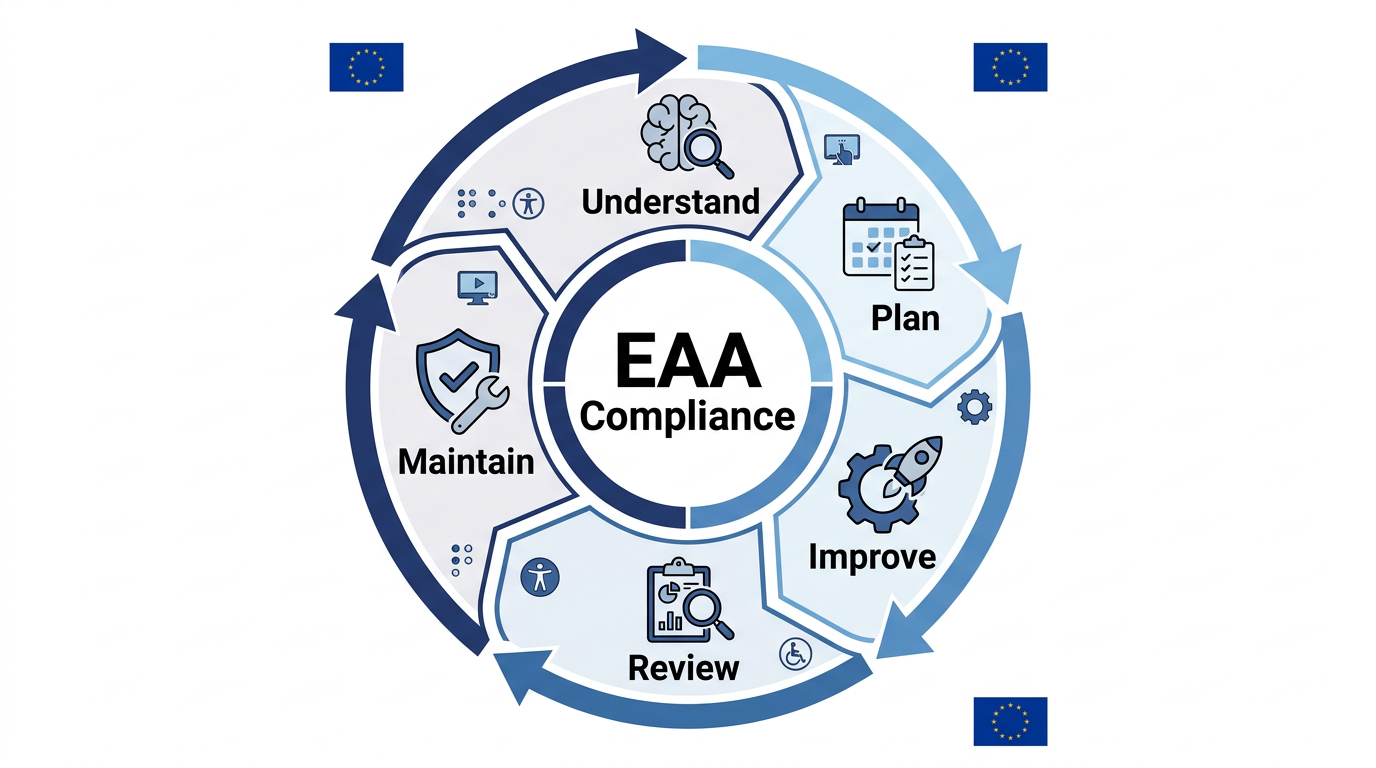
Figure 1. EAA compliance should be viewed as an ongoing cycle of understanding, planning, improving, reviewing and maintaining accessibility rather than a one-off project.
Frequently Asked Questions
What does EAA compliance mean?
EAA compliance refers to meeting the accessibility requirements introduced by the legislation where they apply to relevant products and services. For many organisations, this involves embedding accessibility throughout the lifecycle of their digital services.
Is compliance a one-off activity?
No. Compliance should be viewed as an ongoing process. As products and services evolve, accessibility should continue to be reviewed, tested and improved.
Does compliance only apply to websites?
No. Depending on the organisation, accessibility may also apply to mobile applications, banking services, transport booking systems, self-service terminals, digital publications and other products or services covered by the legislation.
Does EAA compliance guarantee a perfect user experience?
Accessibility is about continually reducing barriers and improving usability. While no organisation can guarantee perfection, maintaining accessibility as an ongoing process helps create better experiences for disabled users and the wider public.
Where should organisations begin?
Many organisations begin by understanding how accessibility currently affects their products and services before planning future improvements. Building accessibility into everyday working practices is generally more effective than treating it as a one-off exercise.
Consultation
If you're unsure how accessibility applies to your organisation or would like independent advice, we're always happy to help.
Final Thoughts
EAA compliance is about much more than meeting legal requirements. It represents an ongoing commitment to creating products and services that remain accessible as technology, user expectations and organisations continue to evolve.
The most successful organisations view accessibility as part of everyday business rather than as a separate project. By building accessibility into planning, design, development, testing and continuous improvement, it becomes easier to create better experiences for everyone while supporting long-term accessibility goals.