What Is EAA? A Simple Guide to the European Accessibility Act
Understanding the abbreviation
If you've come across the abbreviation EAA and wondered what it means, you're not alone. This guide explains what EAA stands for, why the term is widely used and how it relates to the European Accessibility Act, helping you understand why accessibility has become such an important consideration for organisations across Europe and beyond.
Introduction
If you've searched for what is EAA, there's a good chance you've recently encountered the abbreviation while reading about accessibility, digital services or new legal requirements affecting organisations across Europe.
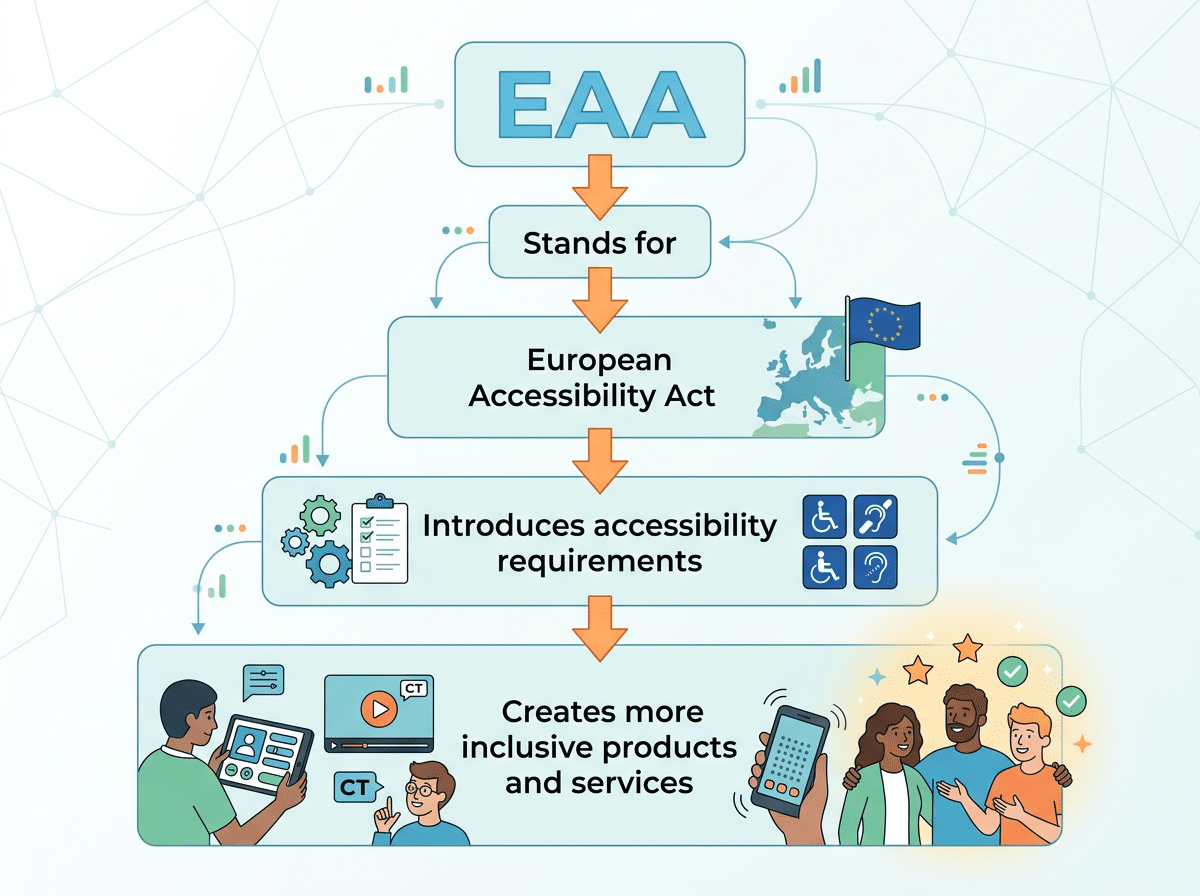
EAA stands for the European Accessibility Act, a piece of legislation introduced to improve the accessibility of a wide range of products and services. While the full name is used in official publications, many organisations, accessibility professionals and technology providers simply refer to it as EAA during everyday conversations.
The abbreviation has become increasingly common because it is shorter, easier to remember and widely recognised within the accessibility community. As awareness of the legislation has grown, so too has the use of EAA across articles, guidance documents, conferences and professional discussions.
If you're unfamiliar with the legislation itself, our guide to the European Act explains the law in more detail. You may also come across the term EU Accessibility Act, which is another commonly used way of referring to the same legislation. Finally, if you're interested in the practical side of implementing accessibility, our guide to EAA Accessibility explains how organisations apply accessibility throughout the design, development and testing of digital products and services.
Understanding what EAA means is often the first step towards understanding accessibility requirements and why they are becoming increasingly important for organisations that provide products and services to customers across Europe.
What Does It Stand For?
EAA is the abbreviation used for the legislation designed to improve the accessibility of products and services used by people across the European Union. Although the official title appears in legal documents and government publications, the abbreviation has become the most common way of referring to it in everyday conversations.
Using abbreviations is common for major legislation and technical standards. Just as organisations often refer to WCAG instead of the Web Content Accessibility Guidelines, many people simply use EAA when discussing accessibility requirements, guidance and implementation.
The abbreviation does not represent a different law or a separate initiative. Whenever someone refers to EAA in the context of digital accessibility, they are almost always referring to the same legislation.
For this reason, you'll often see EAA used in articles, webinars, accessibility conferences, training courses and technical documentation. Understanding the abbreviation makes it much easier to follow discussions and recognise that everyone is talking about the same legislation.
Why Is the Abbreviation Used?
The main reason the abbreviation is used is simplicity. The official title is relatively long, particularly when it appears repeatedly throughout guidance documents or technical discussions. Using EAA makes communication quicker while still referring to exactly the same legislation.
As the legislation has become more widely recognised, the abbreviation has become part of the everyday language used by accessibility professionals, software developers, consultants and organisations responsible for digital products and services.
It is also increasingly common in online searches. Many people who are introduced to the legislation through colleagues, webinars or industry events hear the abbreviation before they know what it stands for. This explains why searches such as "What is EAA?" have become more frequent as awareness of accessibility continues to grow.
Why Has It Become So Common?
Although the legislation has existed for several years, the abbreviation EAA has become much more widely recognised as organisations have focused on improving accessibility. As awareness of accessibility has increased, the abbreviation has appeared more frequently in guidance documents, webinars, industry events and professional discussions.
Today, many organisations use EAA as a convenient shorthand when discussing accessibility strategies, digital transformation projects and inclusive design. It is often quicker to say or write "EAA" than repeat the full title of the legislation, particularly when accessibility is discussed regularly.
The growing use of the abbreviation also reflects a wider change in how organisations think about accessibility. Rather than viewing it as a specialist technical subject, accessibility is increasingly recognised as an important part of delivering high-quality digital products and services that work for everyone.
For many businesses, understanding what EAA stands for is the starting point. The next step is understanding how accessibility applies in practice and how it can be built into everyday processes.
Why Is It Important to Understand EAA?
Knowing what EAA stands for is useful, but understanding why it matters is even more important.
Accessibility is no longer simply a technical consideration for developers or accessibility specialists. It has become a business consideration that can influence customer experience, digital strategy, procurement, product development and long-term planning.
Understanding EAA helps organisations make informed decisions when designing new products, improving existing digital services and planning future projects. It also encourages accessibility to be considered from the earliest stages of a project rather than as a final check before launch.
Many organisations are discovering that accessibility delivers benefits well beyond compliance. Digital products that are easier to use, understand and navigate often improve the experience for all users, helping to remove barriers and create more inclusive services.
If your organisation is developing new digital products or services, following the principles of accessible design from the beginning is one of the most effective ways of embedding accessibility into every stage of a project.
Common Misunderstandings About EAA
"EAA is a technical standard."
No. EAA is the abbreviation for the legislation. Technical guidance on achieving accessibility is provided through recognised standards such as WCAG 2.2, which explain how many accessibility barriers can be identified and addressed.
"It only affects websites."
Although websites are an important part of accessibility, the legislation also covers many other products and services. Depending on the organisation, this may include mobile applications, self-service terminals, banking services, transport booking systems and digital publications.
"Only accessibility specialists need to understand it."
Accessibility is becoming relevant to a much wider audience. Designers, developers, project managers, procurement teams, content authors and business leaders all have an important role in creating accessible products and services.
"Understanding EAA means you're compliant."
Knowing what EAA stands for is only the beginning. Organisations still need to understand how accessibility applies to their own products and services and how accessibility should be incorporated into everyday working practices.
For organisations with existing websites or applications, carrying out an accessibility audit is often the most effective way to identify current accessibility barriers and prioritise future improvements.
What Does EAA Mean for Organisations?
Understanding EAA is only the first step. Once organisations become familiar with the abbreviation, the next challenge is understanding how accessibility affects their own products, services and customers.
Accessibility is no longer viewed as something that can be considered at the end of a project. Organisations are increasingly recognising that accessibility should influence planning, design, development, procurement and ongoing maintenance from the very beginning.
Building accessibility into projects from the outset is usually more effective than attempting to resolve barriers after launch. Following the principles of accessible web design helps organisations create digital products and services that are easier for everyone to use while reducing the cost and complexity of later improvements.
Frequently Asked Questions
What does EAA stand for?
EAA stands for the abbreviation commonly used when referring to the legislation. It is widely used by organisations, consultants and accessibility professionals because it is quicker and easier than repeatedly using the full title.
Is EAA the same as the legislation?
Yes. EAA is simply the abbreviated name used in everyday conversations, articles and professional guidance. Both terms refer to exactly the same legislation.
Why do people use the abbreviation?
The abbreviation is shorter, easier to remember and has become widely recognised across the accessibility sector. As awareness has grown, many organisations now use EAA in place of the full legislative title during meetings, presentations and written guidance.
Is EAA only relevant to websites?
No. Accessibility extends to many products and services, including mobile applications, transport booking systems, banking services, self-service terminals and digital publications.
Does understanding EAA mean an organisation complies with the legislation?
No. Understanding the terminology is simply the first step. Organisations should understand how accessibility applies to their own products and services before planning any improvements.
Further help
If you're unsure how accessibility applies to your organisation or would like independent advice, we're always happy to help.
Book a free 15-minute consultation
EU Accessibility Act – Everything Businesses Need to Know
Independent guidance on the EU Accessibility Act from accessibility specialists
If you've recently searched for the EU Accessibility Act 2025, you're not alone. Since the legislation came into force, thousands of organisations have been trying to understand what it means, who it affects and whether they need to take action.
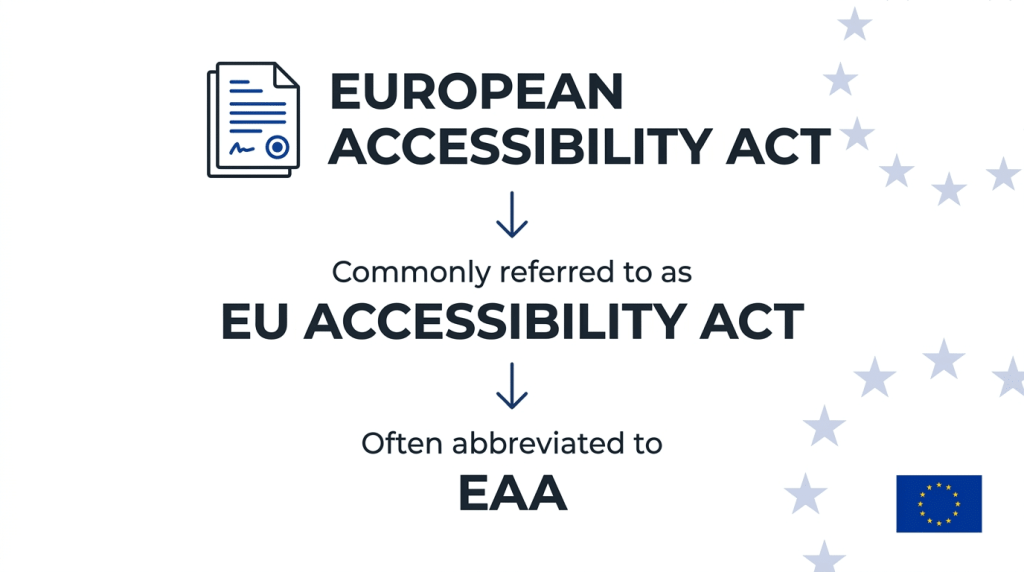
The official name of the legislation is the European Accessibility Act, but many businesses, websites and news articles refer to it simply as the EU Accessibility Act. Both names describe the same legislation.
Whether your organisation is based in the UK, Europe or elsewhere, understanding the law is becoming increasingly important. This guide explains what the EU Accessibility Act is, why it matters and what businesses should do next.
Book a free 15-minute consultation
In This Guide
- What the legislation is
- Why people use different names for it
- Why the law was introduced
- Who should pay attention
- Why organisations outside Europe may still be affected
- Common misconceptions
- What businesses should do next
What Is the EU Accessibility Act?
The EU Accessibility Act is the commonly used name for legislation introduced by the European Union to improve accessibility for disabled people. Although many people use the shorter title, it refers to the same law that established accessibility requirements for a wide range of digital products and services across Europe.
The legislation came into force on 28 June 2025 and affects organisations providing certain products and services to customers within the European Union. This includes many businesses located outside Europe that trade with EU customers.
The purpose of the legislation is to remove barriers that prevent disabled people from accessing digital services. Rather than each member state applying different accessibility rules, the legislation creates a more consistent framework across the European Union.
Accessibility is no longer simply considered good practice. For many organisations, it has become an important legal and commercial requirement.
Why Is It Called the EU Accessibility Act?
One of the most common questions businesses ask is whether the EU Accessibility Act and the official legislation are different.
They are not.
The formal legal title is longer, so many organisations, journalists and businesses naturally shorten it to "EU Accessibility Act" when discussing the legislation. Both names describe exactly the same law.
This is similar to the way legislation is often abbreviated in everyday conversation. Using the shorter name makes discussions easier while still referring to the same legal requirements.
Why Was the EU Accessibility Act Introduced?
The EU Accessibility Act was introduced to make products and services more accessible to disabled people while creating a more consistent approach to accessibility across the European Union.
Before the legislation, accessibility requirements often varied between member states. Businesses operating internationally could find themselves dealing with different rules in different countries, making compliance more complicated and increasing the cost of developing accessible products and services.
For disabled people, the experience was equally inconsistent. A website, banking service or mobile application that worked well in one country might present significant barriers in another. This lack of consistency made it more difficult for people to access information, purchase products and use everyday digital services independently.
The legislation aims to reduce these differences by establishing a common framework for accessibility. Rather than treating accessibility as an optional feature or an afterthought, it encourages organisations to build accessibility into the design, development and maintenance of their products and services from the outset.
Although many organisations first think about websites when they hear the term "EU Accessibility Act", the legislation has a much broader scope. It applies to a wide range of digital products and services that people rely on every day, helping to create a more inclusive experience for millions of users across Europe.
Who Should Pay Attention?
One of the biggest misconceptions is that the legislation only affects large multinational organisations. In reality, many different types of businesses should understand whether the requirements apply to them.
If your organisation provides products or services to customers within the European Union, it is important to understand how the legislation may affect you. This applies whether your business is based inside or outside the EU.
Examples of organisations that may be affected include:
- Online retailers selling products to EU customers.
- Software companies providing cloud-based services.
- Banks and financial service providers.
- Transport operators offering online booking.
- Publishers supplying digital books or publications.
- Telecommunications providers.
- Businesses developing mobile applications.
- Manufacturers of certain digital products and self-service technology.
Not every organisation will have exactly the same obligations, and there are exemptions in some circumstances. However, businesses should avoid assuming that the legislation does not apply without first understanding its scope.
For many organisations, taking the time to understand the legislation now is far easier than dealing with accessibility issues after products have already been launched or complaints have been received.
Does the EU Accessibility Act 2025 Affect Businesses Outside Europe?
Yes, in many cases it can.
This is one of the most frequently misunderstood aspects of the legislation. Many organisations assume that because they are based outside the European Union, they do not need to consider the requirements.
That is not necessarily true.
The legislation is concerned with products and services made available to people within the European Union. If your organisation supplies digital products or services to customers in EU member states, you may need to comply regardless of where your business is located.
This means organisations based in countries such as the United Kingdom, the United States, Canada or Australia should not automatically assume they are outside the scope of the legislation.
For example, an online retailer based in the UK that sells products to customers in France or Germany may need to consider the accessibility requirements. Likewise, a software company providing subscription services across Europe should understand how the legislation applies to its digital platforms.
Every organisation is different, and the exact legal position will depend on the products or services being offered. However, businesses that trade internationally should not dismiss the legislation simply because their headquarters are located outside the European Union.
Understanding your obligations early gives you time to plan improvements, prioritise accessibility work and reduce the risk of future compliance issues.
Common Misunderstandings About the Legislation
As awareness of the EU Accessibility Act 2025 has grown, so have the number of misconceptions surrounding it. Many organisations assume they understand the legislation based on headlines or social media posts, but the reality is often more nuanced.
“It only applies to businesses based in the European Union.”
This is probably the most common misunderstanding. Many organisations outside the EU assume they have nothing to worry about simply because they are not established in an EU member state.
In reality, the location of your headquarters is not always the deciding factor. If your products or services are offered to customers within the European Union, the legislation may still be relevant to your organisation.
“It only affects websites.”
Websites are only one part of the picture. The legislation covers a much broader range of digital products and services, including mobile applications, online banking, e-commerce platforms, ticketing systems, self-service technology and many other consumer-facing services.
For many organisations, accessibility needs to be considered across an entire digital ecosystem rather than on a single website.
“Accessibility is only about people who are blind.”
Accessibility benefits people with a wide range of disabilities, including those with visual, hearing, physical, cognitive and neurological impairments. Many accessibility improvements also make digital services easier for everyone to use, particularly on mobile devices or in challenging environments.
“We can fix everything with an accessibility overlay.”
There is no single product that can make an inaccessible website or application fully compliant. Although automated tools and overlays may help identify or address some issues, they cannot replace good design, accessible development and testing with disabled users.
Organisations should view accessibility as an ongoing process rather than a one-off technical exercise.
What Should Businesses Do Next?
If your organisation may be affected by the legislation, the first step is understanding how it applies to your products and services. Many businesses discover that they already have accessible features in place, while others identify areas that need improvement.
Rather than trying to fix everything at once, it is usually more effective to take a structured approach. Understanding your current position allows you to prioritise the most significant barriers, plan improvements and demonstrate a genuine commitment to accessibility.
Accessibility should not be viewed simply as a legal requirement. Well-designed accessible products and services improve the experience for all users, reduce support requests and help organisations reach a wider audience.
For many businesses, seeking independent advice early can save significant time, cost and effort later in the process.
Book a free 15-minute consultation
Frequently Asked Questions
Is the EU Accessibility Act 2025 the same as the official legislation?
Yes. The EU Accessibility Act is simply the shortened name that many organisations, journalists and businesses use when referring to the legislation. Both names describe exactly the same legal requirements.
When did the legislation come into force?
The legislation became applicable on 28 June 2025. From this date, many products and services supplied within the European Union are expected to meet the relevant accessibility requirements.
Does it only apply to organisations based in Europe?
No. Businesses outside the European Union may also need to comply if they provide products or services to customers within EU member states. The important factor is often where the service is offered rather than where the organisation is headquartered.
Does the legislation only cover websites?
No. It covers a much broader range of products and services, including mobile applications, software, banking services, transport booking systems, e-books, self-service terminals and many other consumer-facing technologies.
Do small businesses need to worry about the legislation?
Some organisations may benefit from exemptions depending on their circumstances, but businesses should never assume they are automatically excluded. It is always advisable to understand how the legislation applies before deciding that no action is required.
Can automated accessibility tools make me compliant?
No. Automated tools can identify some accessibility issues, but they cannot determine whether disabled people can successfully use your products or services. Manual testing and testing with disabled users remain essential parts of any accessibility programme.
Where Next?
If you found this guide useful, you may also find these resources helpful:
- Complete guide to the European Accessibility Act 2025
- Does the legislation apply to UK businesses? (Coming soon)
- Who does the legislation apply to? (Coming soon)
- How to comply with the legislation. (Coming soon)
If you're unsure how the legislation applies to your organisation, we'd be happy to help.
Book a free 15-minute consultation
Final Thoughts
The EU Accessibility Act 2025 is one of the most significant developments in digital accessibility for many years. While understanding the legislation can seem daunting at first, taking the time to understand your responsibilities now is far easier than responding to accessibility problems later.
Whether your organisation is based in the UK, elsewhere in Europe or further afield, accessibility should be viewed as an opportunity rather than simply another compliance exercise. Accessible products and services reach more people, provide a better user experience and demonstrate a commitment to inclusion.
By taking a structured approach and seeking expert advice where necessary, organisations can prepare with confidence while creating better digital experiences for everyone.
EAA Accessibility: What It Means and Why It Matters
Understanding EAA Accessibility
EAA accessibility is becoming an increasingly important topic for organisations that design, develop or provide digital products and services. This guide explains what the term means, why it has become so widely used and how it relates to the European Accessibility Law, helping you understand why accessibility is now an essential part of delivering inclusive digital experiences.
Introduction
If you've recently searched for EAA accessibility, you're not alone. Since the introduction of the European Accessibility Act, businesses across Europe and beyond have been trying to understand what the term means and how it affects the way they design and deliver products and services.
Although EAA accessibility 2025 became a popular search phrase around the time the legislation came into force, accessibility is not simply a one-off legal deadline. It represents an ongoing commitment to creating products and services that can be used by as many people as possible, including disabled people and those with access needs.
While the legislation provides the legal framework, EAA accessibility is the practical application of those principles. It covers the way organisations design, develop, test and continually improve their digital products and services to ensure they remain accessible throughout their lifecycle.
If you're unfamiliar with the legislation itself, our guide to the European Accessibility Act provides a complete overview of the law.
Our guide explaining the EU Accessibility Act explores why the legislation is often referred to by that name.
Whether you're planning a new digital service, reviewing an existing website or simply trying to understand your responsibilities, understanding EAA accessibility is an excellent place to start.
Book a free 15-minute consultation
What Does EAA Accessibility Mean?
The term EAA accessibility describes the practical process of ensuring that products and services meet the accessibility requirements introduced by the European Accessibility Act. Rather than referring to a single technical standard or software product, it encompasses the way organisations design, develop, test and maintain accessible experiences for everyone.
Accessibility is about removing barriers that might prevent disabled people from using a product or service independently. This could include making websites easier to navigate with a keyboard, ensuring mobile applications work with screen readers, providing sufficient colour contrast, or making online forms simpler to understand and complete.
The concept extends far beyond websites. Depending on the products or services being offered, EAA accessibility may also involve mobile applications, e-commerce platforms, banking services, ticketing systems, self-service terminals, e-books and other digital technologies that people rely on every day.
For many organisations, accessibility is no longer something that can be added at the end of a project. It is most effective when considered from the very beginning, influencing design decisions, development practices, testing and ongoing improvements throughout the product lifecycle.
This is why accessibility is increasingly viewed as a continuous process rather than a one-off exercise. Organisations that build accessibility into their everyday workflows are often able to deliver better user experiences while reducing the cost and complexity of fixing problems later.
If you're planning a new digital service, following the principles of accessible web design from the outset is usually far more effective than attempting to retrofit accessibility after launch.
Why EAA Accessibility Has Become Such an Important Topic
Although EAA accessibility 2025 became a widely searched phrase around the time the legislation came into force, the interest in accessibility has continued to grow. Many organisations first became aware of their responsibilities during 2025, but the need to create accessible products and services did not end once the implementation date had passed.
Today, accessibility is increasingly recognised as an essential part of delivering high-quality digital experiences. Organisations are expected to consider accessibility throughout the lifecycle of their products and services, from the earliest planning stages through to development, testing and ongoing maintenance.
There are several reasons why EAA accessibility has become such an important topic.
Firstly, millions of people rely on accessible products and services every day. Whether someone uses a screen reader, voice recognition software, keyboard navigation or simply benefits from clear and consistent design, accessibility helps ensure that digital services can be used independently and confidently.
Secondly, organisations are recognising that accessibility is good business. Accessible products often provide a better experience for everyone, improve customer satisfaction and reduce barriers that might otherwise prevent people from completing tasks online.
Finally, accessibility should be viewed as an ongoing commitment rather than a one-off project. New features are added, websites evolve, mobile applications are updated and customer expectations continue to change. Accessibility therefore needs to be maintained over time rather than treated as a single compliance exercise.
Many organisations use WCAG 2.2 as the recognised technical standard for designing, developing and testing accessible digital services. While legislation sets out the legal requirements, the standard provides practical guidance on how many accessibility barriers can be identified and addressed.
What Does Accessibility Cover?
Accessibility is often associated with websites, but EAA accessibility extends much further than a single webpage or online service. The legislation applies to a wide range of products and services that people use every day, placing accessibility at the heart of the customer experience.
Depending on your organisation, accessibility may include:
- Websites and online portals
- Mobile applications
- E-commerce platforms
- Banking and financial services
- Transport booking and ticketing systems
- E-books and digital publications
- Self-service kiosks and payment terminals
- Customer communication and support services
Although every organisation is different, the principle remains the same. Products and services should be designed so that they can be used by as many people as possible, regardless of disability or the technology they rely upon.
Accessibility is not achieved by a single activity. Instead, it should be considered throughout the entire lifecycle of a product or service.
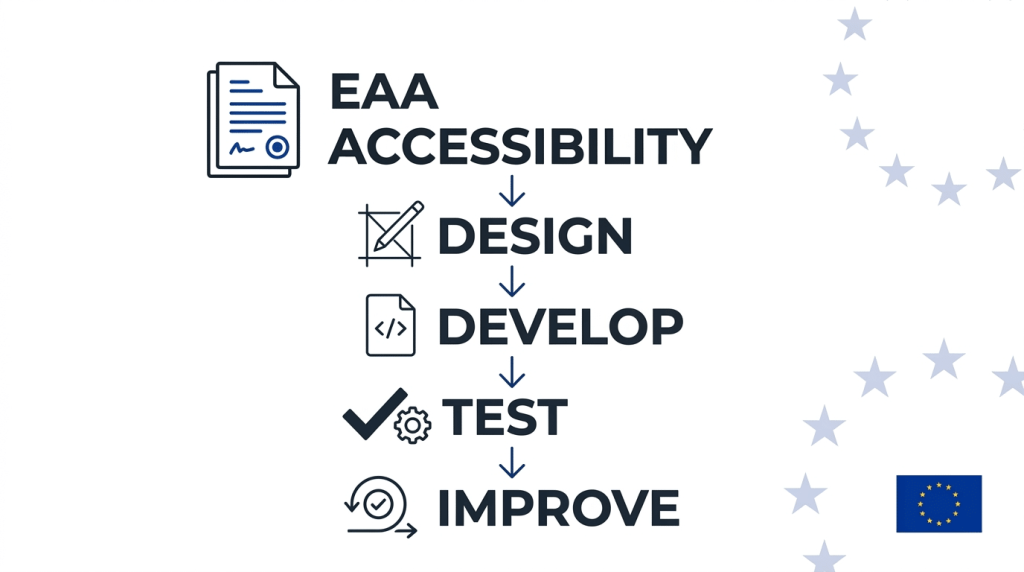
Figure 1 illustrates this continuous process.
Insert infographic here
Figure 1. Accessibility should be considered throughout the lifecycle of a product or service, from initial design through to continuous improvement.
Rather than treating accessibility as a final check before launch, successful organisations build it into every stage of a project. This typically begins with accessible design, continues through development, is verified through testing and remains an ongoing process as products and services evolve.
Where existing websites or applications are already in use, carrying out an accessibility audit is often the most effective way to understand current accessibility barriers and prioritise future improvements.
Who Should Be Thinking About EAA Accessibility?
Although the legislation applies to specific products and services, EAA accessibility is relevant to a much wider audience than many organisations initially realise.
If your organisation designs, develops, manages or supplies digital products or services, accessibility should already be part of your planning process. Whether you're launching a new website, updating a mobile application or improving an existing online service, considering accessibility from the outset is far more effective than making changes after launch.
EAA accessibility is particularly important for:
- Business owners planning new digital services.
- Website owners reviewing existing platforms.
- Designers creating user interfaces and customer journeys.
- Developers building websites, software and mobile applications.
- Product managers responsible for digital services.
- Marketing teams publishing online content.
- Procurement teams selecting third-party platforms or software.
Even organisations that are not directly affected by the legislation often choose to improve accessibility because it leads to better user experiences, broader customer reach and more inclusive digital services.
Rather than viewing accessibility as a legal obligation alone, many organisations now see it as part of delivering quality. Digital services that are easier to understand, navigate and use tend to benefit everyone, not just disabled users.
For many organisations, the most successful accessibility programmes begin with awareness. Once accessibility becomes part of everyday decision-making, it naturally influences design, development, content creation, testing and future improvements.
Common Misunderstandings About EAA Accessibility
As awareness of accessibility has grown, so too have the number of misconceptions surrounding what it involves. Understanding the facts can help organisations make better decisions and avoid unnecessary confusion.
"Accessibility only affects disabled people."
This is one of the most common misconceptions. While accessibility is essential for many disabled people, improvements such as clearer navigation, better colour contrast, simpler language and more consistent layouts often benefit everyone, including older users, people using mobile devices and those in challenging environments.
"Accessibility is just about websites."
Websites are only one part of the picture. Depending on the products and services an organisation provides, accessibility may also include mobile applications, self-service terminals, digital documents, customer communications and many other technologies.
"Accessibility can be added just before launch."
Accessibility is most successful when it is considered throughout a project. Designing with accessibility in mind from the beginning is usually more effective and considerably less expensive than correcting problems after a product or service has been released.
"Accessibility is a one-off project."
Accessibility is not something that can simply be completed and forgotten. Websites change, software is updated, new content is published and customer expectations continue to evolve. Maintaining accessibility requires ongoing attention as products and services develop over time.
"Automated tools can check everything."
Automated testing tools are extremely valuable, but they cannot identify every accessibility issue. Many barriers can only be found through manual testing and by involving people who use assistive technologies such as screen readers, voice recognition software and keyboard navigation.
Book a free 15-minute consultation
Frequently Asked Questions
What does EAA stand for?
EAA stands for the European Accessibility Act. The abbreviation is widely used by organisations, consultants and technology providers when discussing accessibility requirements introduced by the legislation.
Is EAA accessibility only about websites?
No. While websites are an important part of accessibility, EAA accessibility also applies to many other products and services, including mobile applications, e-commerce platforms, banking services, transport booking systems, self-service terminals and digital publications.
Why has EAA accessibility become so important?
Awareness of accessibility has increased significantly since the legislation became applicable in June 2025. Organisations are increasingly recognising that accessible products and services provide better experiences for everyone while helping meet legal obligations where applicable.
Is accessibility a one-off project?
No. Accessibility should be viewed as an ongoing process. As products, services and technologies evolve, accessibility should continue to be reviewed, tested and improved to ensure barriers do not develop over time.
Does EAA accessibility mean my organisation must comply with the legislation?
That depends on the products or services your organisation provides and where they are offered. Understanding whether the legislation applies to your organisation requires consideration of your specific circumstances, which we explore in our other guides.
Where Next?
Continue your reading:
- Complete guide to the legislation
- Why it is often called the EU Act
- What is EAA? (Coming soon)
- EAA Compliance (Coming soon)
Book a free 15-minute consultation
Final Thoughts
EAA accessibility is about far more than meeting legal requirements. It represents a practical approach to designing, developing, testing and continually improving products and services so they can be used by as many people as possible.
As organisations continue to improve their digital services, accessibility should be viewed as an ongoing commitment rather than a single project. Building accessibility into everyday processes not only benefits disabled users but also creates better experiences for customers, employees and the wider public.
Whether you're just beginning your accessibility journey or looking to strengthen existing practices, taking a structured approach today will help create more inclusive and sustainable digital experiences for the future.
Site Map
Acceptable Use Policy
This acceptable use policy sets out the terms between you and us under which you may access our website. This acceptable use policy applies to all users of, and visitors to, our site.
Your use of our site means that you accept, and agree to abide by, all the policies in this acceptable use policy, which supplement our terms of website use (available on this website under the Legal section).
This website is a site operated by the company named on this website. All relevant company details and regulatory authorities are on this website.
Prohibited uses
You may use our site only for lawful purposes. You may not use our site:
- In any way that breaches any applicable local, national or international law or regulation.
- In any way that is unlawful or fraudulent, or has any unlawful or fraudulent purpose or effect.
- For the purpose of harming or attempting to harm minors in any way.
- To send, knowingly receive, upload, download, use or re-use any material which does not comply with our content standards below.
- To transmit, or procure the sending of, any unsolicited or unauthorised advertising or promotional material or any other form of similar solicitation (spam).
- To knowingly transmit any data, send or upload any material that contains viruses, Trojan horses, worms, time-bombs, keystroke loggers, spyware, adware or any other harmful programs or similar computer code designed to adversely affect the operation of any computer software or hardware.
You also agree:
- Not to reproduce, duplicate, copy or re-sell any part of our site in contravention of the provisions of our terms of website use (available on this website under the Legal section).
- Not to access without authority, interfere with, damage or disrupt:
- any part of our site;
- any equipment or network on which our site is stored;
- any software used in the provision of our site; or
- any equipment or network or software owned or used by any third party.
Interactive services
We may from time to time provide interactive services on our site, including, without limitation:
- Chat rooms.
- Bulletin boards.
- Blogs
Where we do provide any interactive service, we will provide clear information to you about the kind of service offered, if it is moderated and what form of moderation is used (including whether it is human or technical).
We will do our best to assess any possible risks for users (and in particular, for children) from third parties when they use any interactive service provided on our site, and we will decide in each case whether it is appropriate to use moderation of the relevant service (including what kind of moderation to use) in the light of those risks. However, we are under no obligation to oversee, monitor or moderate any interactive service we provide on our site, and we expressly exclude our liability for any loss or damage arising from the use of any interactive service by a user in contravention of our content standards, whether the service is moderated or not.
The use of any of our interactive services by a minor is subject to the consent of their parent or guardian. We advise parents who permit their children to use an interactive service that it is important that they communicate with their children about their safety online, as moderation is not foolproof. Minors who are using any interactive service should be made aware of the potential risks to them.
Where we do moderate an interactive service, we will normally provide you with a means of contacting the moderator, should a concern or difficulty arise.
Content standards
These content standards apply to any and all material which you contribute to our site (contributions), and to any interactive services associated with it.
You must comply with the spirit and the letter of the following standards. The standards apply to each part of any contribution as well as to its whole.
Contributions must:
- Be accurate (where they state facts).
- Be genuinely held (where they state opinions).
- Comply with applicable law in the UK and in any country from which they are posted.
Contributions must not:
- Contain any material which is defamatory of any person.
- Contain any material which is obscene, offensive, hateful or inflammatory.
- Promote sexually explicit material.
- Promote violence.
- Promote discrimination based on race, sex, religion, nationality, disability, sexual orientation or age.
- Infringe any copyright, database right or trade mark of any other person.
- Be likely to deceive any person.
- Be made in breach of any legal duty owed to a third party, such as a contractual duty or a duty of confidence.
- Promote any illegal activity.
- Be threatening, abuse or invade another’s privacy, or cause annoyance, inconvenience or needless anxiety.
- Be likely to harass, upset, embarrass, alarm or annoy any other person.
- Be used to impersonate any person, or to misrepresent your identity or affiliation with any person.
- Give the impression that they emanate from us, if this is not the case.
- Advocate, promote or assist any unlawful act such as (by way of example only) copyright infringement or computer misuse.
Suspension and termination
We will determine, in our discretion, whether there has been a breach of this acceptable use policy through your use of our site. When a breach of this policy has occurred, we may take such action as we deem appropriate.
Failure to comply with this acceptable use policy constitutes a material breach of the terms of use (available on this website under the Legal section) upon which you are permitted to use our site, and may result in our taking all or any of the following actions:
- Immediate, temporary or permanent withdrawal of your right to use our site.
- Immediate, temporary or permanent removal of any posting or material uploaded by you to our site.
- Issue of a warning to you.
- Legal proceedings against you for reimbursement of all costs on an indemnity basis (including, but not limited to, reasonable administrative and legal costs) resulting from the breach.
- Further legal action against you.
- Disclosure of such information to law enforcement authorities as we reasonably feel is necessary.
We exclude liability for actions taken in response to breaches of this acceptable use policy. The responses described in this policy are not limited, and we may take any other action we reasonably deem appropriate.
Changes to the acceptable use policy
We may revise this acceptable use policy at any time by amending this page. You are expected to check this page from time to time to take notice of any changes we make, as they are legally binding on you. Some of the provisions contained in this acceptable use policy may also be superseded by provisions or notices published elsewhere on our site.
Accessibility Information
We have working in website accessibility since 2006 and make every effort to ensure our website is as accessible as possible. However, if you find any problems with using the website, please accept our apologies and allow us to put it right. Please call us on +44-1243-776399 or send us an email so we can resolve it for you.
This statement is to give you more information on what we have done to make your experience as accessible as possible.
- The main areas of each web page are defined by Landmarks
- There is a structured use of Headings
- Jump menus are provided to allow you to navigate directly to the main content of the page, the Site Map and this Accessibility Statement. These can be reached by using the Tab key after the page has loaded.
- The Site Map on this website contains links to all the pages on this website in a clean, structured list, which may be easier to use.
- We have developed a set of accessibility tools that do not rely on 3rd party plugins or overlays, as these make websites less accessible. We believe that the only way to truly make our websites accessible for all of our visitors is to include such tools within our code.
- If you wish to change the text sizes or the screen contrast, please use the options provided under our Accessibility Tools icon. You can reach these with a mouse or using the tab key on your keyboard.
- ‘Standard text’ will provide a 14px equivalent version on most browsers
- ‘Large text’ will provide an 18px equivalent version on most browsers
- ‘Extra Large text’ will provide a 21px equivalent version on most browsers
- ‘Blue on Yellow", "Yellow on Blue", "White on Black" and "Black on Orange" are different contrast options available, which can be particularly helpful for neurodivergent people. All three text sizes may still be selected when any of these options are also chosen.
- ‘Text Only’ will strip off all our styles and provide a plain text, linear version
- The Text Only version can also be displayed in the 4 Colour Contrast Options.
- To resize the text without our help:
- In Google Chrome: Customise (3 dots top right) > Zoom > - or +
- In Edge: Settings and More (3 dots top right) > Zoom > - or +
- In Firefox: View > Text size > Increase or Decrease
- In Safari: View > Zoom In or Zoom Out
- You can also scroll with the wheel of your mouse whilst holding down the control key (Windows) or Apple key (Mac).
- To use the keyboard instead of the mouse;
- Use the Tab key to move and browse amongst the menus and links.
- Pressing ‘Enter’ is the same as clicking a mouse button
- Use the arrow keys on your keyboard to move up or down the page or from left to right.
- There is also a specific Print Style. Should you wish to print off any of the web pages, you will see they will be formatted to ensure they stay one page wide.,
- All images contain an ALT tag unless decorative, where they are marked as empty.
- Links make sense out of context. Wherever possible, title tags have also been used to expand on their meaning.
- Drop-down menu bars to allow you to access child pages from the navigation menu. Each one is marked with an arrow and can be opened with the Enter key. You will then be able to clearly navigate through these by just using the Tab key and the Enter key to make a selection. Each page and child page will light up in turn, just as if a mouse had been used. This is called The Tab Test. If you prefer, please use the site map link for quick and easy browsing.
- Most of our site has ‘breadcrumbs’ on the top of each page which allow you to retrace your steps and go back to where you started. However, older sites may not have this facility so you may need to use the ‘Back’ button on your browser. Back buttons are usually on the top left-hand corner of your browser. By simply clicking on this button, you can retrace your steps through the pages you have already viewed on our website. Some keyboards also have a Back Button as part of their options.
General Accessibility.
- This website conforms to the WCAG 2.2 four principles of accessibility and so is: perceivable, operable, understandable, and robust
- We have considered the full range of techniques, including the advisory techniques, as well as seeking relevant advice about current best practices to ensure that this web content is accessible, as far as possible, to all communities.
- This website has been thoroughly tested on multiple browsers, platforms and devices
- This website has been tested using multiple automated accessibility testing software
- This website has been tested by a REAL person with a disability who tested the website and submitted a report to the original designers who then used it to improve accessibility further.
Web Standards
- All CSS and XHTML created by Access by Design validate to the document type.
- Validation does not equal accessibility.
- If a page on this website does not validate it is almost always because a third-party ‘plug-in’ has needed to be employed. Although we try to use only accessible third parties and we also alert designers to accessibility issues, rectifying them is beyond our control.
- We reserve the right to use the web standards CSS and XHML buttons on this website as all elements within our control validate correctly.
Your computer or smartphone may have an integrated feature that will read the content on the screen to you, out loud. These include ChromeVox on Chrome OS, VoiceOver on Mac and Narrator on Windows.
If you use Windows, these are the two most widely-used screen readers. These links open in a new window.
JAWS, a commercial screen reader that comes with a time-limited demonstration mode.
Web Content Accessibility Guidelines (WCAG) 2.2
This website is compliant with WCAG 2.2 Priority A and AA Standards.
This website also complies with WCAG 2.2 AAA Standards, with the following exception relating to video content. All video content is hosted on YouTube and Vimeo.
- Sign language interpretation is provided for all prerecorded audio content in synchronized media.
(Fails under WCAG 2.1 AAA 1.2.6 )
Both video platforms provide automated captioning and transcripts may be downloaded. We look forward to the day that they can also provide signing facilities.
- This site does not use meta access keys (sometimes called ‘hot keys’). Our research suggests that these are actually detrimental to most keyboard users as they already have their own keys set up which are then overwritten or confused by websites (that do not use a consistent approach). We will review this decision periodically and if research proves otherwise (or technology improves) we will resume these techniques.
- This site may fail validation on third-party technologies. This is because we have little or no ability to recode these to meet our high accessibility standards. However, we always aim to use plug-ins that are either accessible, increase the accessibility or have simple accessible alternatives. If forced to choose between accessibility features and validation, we have made the difficult decision to always choose accessibility.
It was last reviewed on 31 May 2023 by Clive Loseby
Return to the Home Page
Cookie Policy
Information about our use of cookies
Our website uses cookies to distinguish you from other users of our website. This helps us to provide you with a good experience when you browse our website and also allows us to improve our site. By continuing to browse the site, you are agreeing to our use of cookies.
A cookie is a small file of letters and numbers that we store on your browser or the hard drive of your computer if you agree. Cookies contain information that is transferred to your computer's hard drive.
We use the following cookies:
- Strictly necessary cookies. These are cookies that are required for the operation of our website. They include, for example, cookies that enable you to log into secure areas of our website, use a shopping cart or make use of e-billing services.
- Analytical/performance cookies. They allow us to recognise and count the number of visitors and to see how visitors move around our website when they are using it. This helps us to improve the way our website works, for example, by ensuring that users are finding what they are looking for easily.
- Functionality cookies. These are used to recognise you when you return to our website. This enables us to personalise our content for you, greet you by name and remember your preferences (for example, your choice of language or region).
- Targeting cookies. These cookies record your visit to our website, the pages you have visited and the links you have followed. We will use this information to make our website and the advertising displayed on it more relevant to your interests. We may also share this information with third parties for this purpose.
Please note that third parties (including, for example, advertising networks and providers of external services like web traffic analysis services) may also use cookies, over which we have no control. These cookies are likely to be analytical/performance cookies or targeting cookies.
You block cookies by activating the setting on your browser that allows you to refuse the setting of all or some cookies. However, if you use your browser settings to block all cookies (including essential cookies) you may not be able to access all or parts of our site.
Except for essential cookies, all cookies will expire after 30 days.
Privacy Policy
This is the privacy notice of Access by Design.
Access by Design is a trading name of Aragorn Hosting Ltd.
Registered in England and Wales Registration No: 16296996
Registered address: St. Johns House, St. Johns Street, Chichester, England, PO19 1UU
Trading address: 2A Sudley Road, Bognor Regis, West Sussex, PO21 1EU
We respect your privacy and are determined to protect your personal data. The purpose of this privacy notice is to inform you as to how we look after your personal data when you visit our website, regardless of where you visit it from. We’ll also tell you about your privacy rights and how the data protection law protects you.
What is the purpose of this privacy notice?
This privacy notice aims to give you information on how we collect and process your personal data through your use of this website, including any data you may provide through this website when you sign up to our newsletter, purchase a product or service or take part in a competition.
This website is not intended for children and we do not knowingly collect data relating to children.
You must read this privacy notice together with any other privacy notice we may provide on specific occasions when we are collecting or processing personal data about you so that you are fully aware of how and why we are using your data. This privacy notice supplements the other notices and is not intended to override them.
Data controller
Aragorn Hosting Ltd is the controller and responsible for your personal data (collectively referred to as Access by Design, "we", "us" or "our" in this privacy notice).
Our contact details are:
2A Sudley Road, Bognor Regis, West Sussex, PO21 1EU
info@accessbydesign.uk
01243 776399
For all data matters contact our Data Controller on the above details.
Third-party links outside of our control
This website may include links to third-party websites, plug-ins and applications. Clicking on those links or enabling those connections may allow third parties to collect or share data about you. We do not control these third-party websites and are not responsible for their privacy statements.
When you leave our website, we encourage you to read the privacy notice of every website you visit.
- THE PERSONAL DATA WE COLLECT ABOUT YOU
Personal data, or personal information, means any information about an individual from which that person can be identified. You can find out more about personal data from the Information Commissioners Office.
We may collect, use, store and transfer different kinds of personal data about you which we have grouped together follows:
- Identity Data includes First Name, Last Name, Username, Title.
- Contact Data includes Billing Address, Delivery Address, Email Address, Telephone Numbers
- We also collect, use and share aggregated datasuch as statistical or demographic data for any purpose. Aggregated data may be derived from your personal data but is not considered personal data in law as this data does not directly or indirectly reveal your identity. For example, we may aggregate your usage data to calculate the percentage of users accessing a specific website feature. However, if we combine or connect aggregated data with your personal data so that it can directly or indirectly identify you, we treat the combined data as personal data which will be used in accordance with this privacy notice.
We do not collect any Special Categories of Personal Data about you (this includes details about your race or ethnicity, religious or philosophical beliefs, sex life, sexual orientation, political opinions, trade union membership, information about your health and genetic and biometric data). Nor do we collect any information about criminal convictions and offences.
If you fail to provide personal data
Where we need to collect your personal data by law, or under the terms of a contract we have with you and you fail to provide that data when requested, we may not be able to perform the contract we have or are trying to enter into with you (for example, to provide you with goods or services). In this case, we may have to cancel a product or service you have with us but we will notify you if this is the case at the time.
- HOW WE COLLECT YOUR PERSONAL DATA
We use different methods to collect data from and about you including through:
- You may give us your identity, contact and financial data by filling in forms or by corresponding with us by post, phone, email or otherwise. This includes personal data you provide when you
- Apply for our products or services
- Create an account on our website
- Subscribe to our service or publications
- Request marketing information to be sent to you
- HOW WE USE YOUR PERSONAL DATA
We will only use your personal data when the law allows us to. Most commonly, we will use your personal data in the following circumstances:
- Performance of Contract this means processing your data where it is necessary for the performance of a contract to which you are a party or to take steps at your request before entering into such a contract.
- Legitimate Interest this means the interest of our business in conducting and managing our business to enable us to give you the best service/product and the most secure experience. We make sure we consider and balance any potential impact on you (both positive and negative) and your rights before we process your personal data for our legitimate interests. We do not use your personal data for activities where our interests are overridden by the impact on you (unless we have your consent or are otherwise required or permitted to by law). You can obtain further information about how we assess our legitimate interests against any potential impact on you in respect of specific activities by contacting us.
- Comply with a legal or regulatory obligation this means processing your personal data where it is necessary for compliance with a legal or regulatory obligation that we are subject to.
Generally we do not rely on consent as a legal basis for processing your personal data other than in relation to sending third party direct marketing communications to you via email or text message. You have the right to withdraw consent to marketing at any time by contacting us vis the contact details in the data control section near the top of this document.
PURPOSES FOR WHICH WE WILL USE YOUR PERSONAL DATA
We have set out below, in a table format, a description of all the ways we plan to use your personal data, with the legal bases we rely on to do so.
Note that we may process your personal data for more than one lawful ground depending on the specific purpose for which we are using your data. Please contact us if you need details about the specific legal ground we are relying on to process your personal data where more than one ground has been set out in the table below.
| Purpose/Activity | Type of data | Lawful basis for processing including basis of legitimate interest |
|---|---|---|
| To register you as a new customer | (a) Identity(b) Contact | Performance of a contract with you |
| To process and deliver your order including:(a) Manage payments, fees and charges
(b) Collect and recover money owed to us |
(a) Identity(b) Contact
(c) Financial (d) Transaction |
(a) Performance of a contract with you(b) Necessary for our legitimate interests (to recover debts due to us) |
| To manage our relationship with you which will include:(a) Notifying you about changes to our terms or privacy policy
(b) Asking you to leave a review or take a survey |
(a) Identity(b) Contact
(c) Profile (d) Marketing and Communications |
(a) Performance of a contract with you(b) Necessary to comply with a legal obligation
(c) Necessary for our legitimate interests (to keep our records updated and to study how customers use our products/services) |
| To administer and protect our business and this website | (a) Identity | (a) Necessary for our legitimate interests (for running our business, |
Marketing
We strive to provide you with choices regarding certain personal data uses, particularly around marketing and advertising.
We have established the following personal data control mechanisms:
Promotional offers from us
We may use your Identity, Contact, Technical, Usage and Profile Data to form a view on what we think you may want or need, or what may be of interest to you. This is how we decide which products, services and offers may be relevant for you.
You will receive marketing communications from us if you have requested information from us or purchased goods or services from us or if you provided us with your details when you entered a competition or registered for a promotion and, in each case, you have not opted out of receiving that marketing.
Third-party marketing
We will not share your personal data with any company outside of Access by Design.
Opting out
You can ask us or third parties to stop sending you marketing messages at any time.
Where you opt out of receiving these marketing messages, this will not apply to personal data provided to us as a result of a product/service purchase, warranty registration, product or service experience or other transactions.
Cookies
You can set your browser to refuse all or some browser cookies, or to alert you when websites set or access cookies. If you disable or refuse cookies, please note that some parts of this website may become inaccessible or not function properly. For more information about the cookies we use, please see our Cookie Policy.
Change of purpose
We will only use your personal data for the purposes for which we collected it, unless we reasonably consider that we need to use it for another reason and that reason is compatible with the original purpose. If you wish to get an explanation as to how the processing for the new purpose is compatible with the original purpose, please contact us.
If we need to use your personal data for an unrelated purpose, we will notify you and we will explain the legal basis which allows us to do so.
Please note that we may process your personal data without your knowledge or consent, in compliance with the above rules, where this is required or permitted by law.
- WHO WE SHARE YOUR PERSONAL DATA WITH
We may have to share your personal data with the parties set out below for the purposes set out in the table in paragraph 4 above.
- Internal Third Parties who provide additional services such as Graphic Design, Printing, Search Optimisation and Pay Per Click Services
- External Third Parties Service
- Providers based in the UK who provide IT and System Administration Services
- Professional advisers including lawyers, bankers, auditors and insurers based in the UK who provide consultancy, banking, legal, insurance and accounting services.
- HM Revenue & Customs, regulators and other authorities based in the United Kingdom who require reporting of processing activities in certain circumstances.
- Third parties to whom we may choose to sell, transfer, or merge parts of our business or our assets. Alternatively, we may seek to acquire other businesses or merge with them. If a change happens to our business, then the new owners may use your personal data in the same way as set out in this privacy notice.
We require all third parties to respect the security of your personal data and to treat it in accordance with the law. We do not allow our third-party service providers to use your personal data for their own purposes and only permit them to process your personal data for specified purposes and in accordance with our instructions.
- INTERNATIONAL TRANSFERS
We share your personal data within the company. This will involve transferring your data outside the European Economic Area (EEA).
Many of our external third parties are based outside the European Economic Area (EEA) so their processing of your personal data will involve a transfer of data outside the EEA.
Whenever we transfer your personal data out of the EEA, we ensure a similar degree of protection is afforded to it by implementing safeguards.
Please contact us if you want further information on the specific mechanism used by us when transferring your personal data out of the EEA.
- DATA SECURITY
We have put in place appropriate security measures to prevent your personal data from being accidentally lost, used or accessed in an unauthorised way, altered or disclosed. In addition, we limit access to your personal data to those employees, agents, contractors and other third parties who have a business need to know. They will only process your personal data on our instructions and they are subject to a duty of confidentiality.
We have put in place procedures to deal with any suspected personal data breach and will notify you and any applicable regulator of a breach where we are legally required to do so.
- DATA RETENTION
We will only retain your personal data for as long as necessary to fulfil the purposes we collected it for, including for the purposes of satisfying any legal, accounting, or reporting requirements.
To determine the appropriate retention period for personal data, we consider the amount, nature, and sensitivity of the personal data, the potential risk of harm from unauthorised use or disclosure of your personal data, the purposes for which we process your personal data and whether we can achieve those purposes through other means, and the applicable legal requirements.
By law we have to keep basic information about our customers for six years after they cease being customers for tax] purposes.]
In some circumstances you can ask us to delete your data: see Your legal rights below for further information.
In some circumstances we may anonymise your personal data (so that it can no longer be associated with you) for research or statistical purposes in which case we may use this information indefinitely without further notice to you.
- YOUR LEGAL RIGHTS
Unless subject to an exemption under the data protection laws, you have the following rights with respect to your personal data:
- The right to request a copy of the personal data which we hold about you;
- The right to request that we correct any personal data if it is found to be inaccurate or out of date;
- The right to request your personal data is erased where it is no longer necessary to retain such data;
- The right to withdraw your consent to the processing at any time, where consent was the lawful basis for processing your data;
- The right to request that we provide you with your personal data and where possible, to transmit that data directly to another data controller, (known as the right to data portability), where applicable 9i.e. where our processing is based on consent or is necessary for the performance of our contract with you or where we process your data by automated means);
- The right, where there is a dispute in relation to the accuracy or processing of your personal data, to request a restriction is placed on further processing;
- The right to object to our processing of personal data, where applicable i.e. where processing is based on our legitimate interests (or in performance of a task in the public interest/exercise of official authority); direct marketing or processing for the purposes of scientific/historical research and statistics).
If you wish to exercise any of the rights set out above, please contact us using the contact details under the Data Controller section near the top of this document.
No fee required – with some exceptions
You will not have to pay a fee to access your personal data (or to exercise any of the other rights). However, we may charge a reasonable admin fee if your request is clearly unfounded, repetitive or excessive. Alternatively, we may refuse to comply with your request in these circumstances.
What we may need from you
We may need to request specific information from you to help us confirm your identity and ensure your right to access your personal data (or to exercise any of your other rights). This is a security measure to ensure that personal data is not disclosed to any person who has no right to receive it. We may also contact you to ask you for further information in relation to your request to speed up our response.
Time limit to respond
We try to respond to all legitimate requests within one month. Occasionally it may take us longer than a month if your request is particularly complex or you have made a number of requests. In this case, we will notify you and keep you updated.
- Changes to this notice and your duty to inform us of changes
This version was last updated on 24/03/2026
Please keep us informed if your personal data changes during your relationship with us. It is important that the personal data we hold about you is accurate and current.
- Queries, requests or concerns
To exercise all relevant rights, queries or complaints in relation to this policy or any other data protection matter between you and us, please in the first instance contact our Data Protection Officer on the above details.
If this does not resolve your complaint to your satisfaction, you have the right to lodge a complaint with the Information Commissioners Office on 03031231113 or via email https://ico.org.uk/global/contact-us/email/ or at the Information Commissioner's Office, Wycliffe House, Water Lane, Wilmslow, Cheshire, SK9 5AF, England, UK.
Terms of Website Use
PLEASE READ THESE TERMS AND CONDITIONS CAREFULLY BEFORE USING THIS SITE
This terms of use (together with the documents referred to in it) tells you the terms of use on which you may make use of our website, whether as a guest or a registered user. Use of our site includes accessing, browsing, or registering to use our site.
Please read these terms of use carefully before you start to use our site, as these will apply to your use of our site. We recommend that you print a copy of this for future reference.
By using our site, you confirm that you accept these terms of use and that you agree to comply with them.
If you do not agree to these terms of use, you must not use our site.
Other applicable terms
These terms of use refer to the following additional terms, which also apply to your use of our site:
- Our Privacy Policy (available on this website under the Legal section), which sets out the terms on which we process any personal data we collect from you, or that you provide to us. By using our site, you consent to such processing and you warrant that all data provided by you is accurate.
- Our Acceptable Use Policy (available on this website under the Legal section), which sets out the permitted uses and prohibited uses of our site. When using our site, you must comply with this Acceptable Use Policy.
- Our Cookie Policy (available on this website under the Legal section), which sets out information about the cookies on our site.
If you purchase goods from our site, our Terms and conditions of supply will apply to the sales.
Information about us
This website is a site operated by the company named on this website. All relevant company details and regulatory authorities are on this website.
Changes to these terms
We may revise these terms of use at any time by amending this page.
Please check this page from time to time to take notice of any changes we made, as they are binding on you.
Changes to our site
We may update our site from time to time, and may change the content at any time. However, please note that any of the content on our site may be out of date at any given time, and we are under no obligation to update it.
We do not guarantee that our site, or any content on it, will be free from errors or omissions.
Accessing our site
Our site is made available free of charge.
We do not guarantee that our site, or any content on it, will always be available or be uninterrupted. Access to our site is permitted on a temporary basis. We may suspend, withdraw, discontinue or change all or any part of our site without notice. We will not be liable to you if for any reason our site is unavailable at any time or for any period.
You are responsible for making all arrangements necessary for you to have access to our site.
You are also responsible for ensuring that all persons who access our site through your internet connection are aware of these terms of use and other applicable terms and conditions, and that they comply with them.
Your account and password
If you choose, or you are provided with, a user identification code, password or any other piece of information as part of our security procedures, you must treat such information as confidential. You must not disclose it to any third party.
We have the right to disable any user identification code or password, whether chosen by you or allocated by us, at any time, if in our reasonable opinion you have failed to comply with any of the provisions of these terms of use.
If you know or suspect that anyone other than you knows your user identification code or password, you must promptly notify us at the contact email address on this website.
Intellectual property rights
We are the owner or the licensee of all intellectual property rights in our site, and in the material published on it. Those works are protected by copyright laws and treaties around the world. All such rights are reserved.
You may print off one copy, and may download extracts, of any page(s) from our site for your personal use and you may draw the attention of others within your organisation to content posted on our site.
You must not modify the paper or digital copies of any materials you have printed off or downloaded in any way, and you must not use any illustrations, photographs, video or audio sequences or any graphics separately from any accompanying text.
Our status (and that of any identified contributors) as the authors of content on our site must always be acknowledged.
You must not use any part of the content on our site for commercial purposes without obtaining a licence to do so from us or our licensors.
If you print off, copy or download any part of our site in breach of these terms of use, your right to use our site will cease immediately and you must, at our option, return or destroy any copies of the materials you have made.
No reliance on information
The content on our site is provided for general information only. It is not intended to amount to advice on which you should rely. You must obtain professional or specialist advice before taking, or refraining from, any action on the basis of the content on our site.
Although we make reasonable efforts to update the information on our site, we make no representations, warranties or guarantees, whether express or implied, that the content on our site is accurate, complete or up-to-date.
Limitation of our liability
Nothing in these terms of use excludes or limits our liability for death or personal injury arising from our negligence, or our fraud or fraudulent misrepresentation, or any other liability that cannot be excluded or limited by English law.
To the extent permitted by law, we exclude all conditions, warranties, representations or other terms which may apply to our site or any content on it, whether express or implied.
We will not be liable to any user for any loss or damage, whether in contract, tort (including negligence), breach of statutory duty, or otherwise, even if foreseeable, arising under or in connection with:
- use of, or inability to use, our site; or
- use of or reliance on any content displayed on our site.
If you are a business user, please note that in particular, we will not be liable for:
- loss of profits, sales, business, or revenue;
- business interruption;
- loss of anticipated savings;
- loss of business opportunity, goodwill or reputation; or
- any indirect or consequential loss or damage.
If you are a consumer user, please note that we only provide our site for domestic and private use. You agree not to use our site for any commercial or business purposes, and we have no liability to you for any loss of profit, loss of business, business interruption, or loss of business opportunity.
We will not be liable for any loss or damage caused by a virus, distributed denial-of-service attack, or other technologically harmful material that may infect your computer equipment, computer programs, data or other proprietary material due to your use of our site or to your downloading of any content on it, or on any website linked to it.
We assume no responsibility for the content of websites linked on our site. Such links should not be interpreted as endorsement by us of those linked websites. We will not be liable for any loss or damage that may arise from your use of them.
Different limitations and exclusions of liability will apply to liability arising as a result of the supply of any goods by use to you, which will be set out in our Terms and conditions of supply.
Uploading content to our site
Whenever you make use of a feature that allows you to upload content to our site, or to make contact with other users of our site, you must comply with the content standards set out in our Acceptable Use Policy (available on this website under the Legal section).
You warrant that any such contribution does comply with those standards, and you will be liable to us and indemnify us for any breach of that warranty. If you are a consumer user, this means you will be responsible for any loss or damage we suffer as a result of your breach of warranty.
Any content you upload to our site will be considered non-confidential and non-proprietary. You retain all of your ownership rights in your content, but you are required to grant us and other users of the Site a limited licence to use, store and copy that content and to distribute and make it available to third parties. The rights you license to us are described in the next paragraph (Rights you licence).
We also have the right to disclose your identity to any third party who is claiming that any content posted or uploaded by you to our site constitutes a violation of their intellectual property rights, or of their right to privacy.
We will not be responsible, or liable to any third party, for the content or accuracy of any content posted by you or any other user of our site.
We have the right to remove any posting you make on our site if, in our opinion, your post does not comply with the content standards set out in our Acceptable Use Policy (available on this website under the Legal section).
The views expressed by other users on our site do not represent our views or values.
You are solely responsible for securing and backing up your content.
Rights you licence
When you upload or post content to our site, you grant the following licenses:
- A worldwide, non-exclusive, royalty-free, transferable licence to use, reproduce, distribute, prepare derivative works of, display, and perform that content in connection with the services provided by our site and across different media and to promote the site or services; and
- A worldwide, non-exclusive, royalty-free, transferable licence to allow third parties to use the content for their purposes.
We will only ever use your materials to carry out your instructions to us – unless, very exceptionally, a court or other regulator orders us to disclose them.
Viruses
We do not guarantee that our site will be secure or free from bugs or viruses.
You are responsible for configuring your information technology, computer programmes and platform in order to access our site. You should use your own virus protection software.
You must not misuse our site by knowingly introducing viruses, trojans, worms, logic bombs or other material which is malicious or technologically harmful. You must not attempt to gain unauthorised access to our site, the server on which our site is stored or any server, computer or database connected to our site. You must not attack our site via a denial-of-service attack or a distributed denial-of service attack. By breaching this provision, you would commit a criminal offence under the Computer Misuse Act 1990. We will report any such breach to the relevant law enforcement authorities and we will co-operate with those authorities by disclosing your identity to them. In the event of such a breach, your right to use our site will cease immediately.
Linking to our site
You may link to our home page, provided you do so in a way that is fair and legal and does not damage our reputation or take advantage of it.
You must not establish a link in such a way as to suggest any form of association, approval or endorsement on our part where none exists.
You must not establish a link to our site in any website that is not owned by you.
Our site must not be framed on any other site, nor may you create a link to any part of our site other than the home page.
We reserve the right to withdraw linking permission without notice.
The website in which you are linking must comply in all respects with the content standards set out in our Acceptable Use Policy (available on this website under the Legal section).
If you wish to make any use of content on our site other than that set out above, please contact us via the email address on this website.
Third party links and resources in our site
Where our site contains links to other sites and resources provided by third parties, these links are provided for your information only.
We have no control over the contents of those sites or resources.
Applicable law
If you are a consumer, please note that these terms of use, its subject matter and its formation, are governed by English law. You and we both agree to that the courts of England and Wales will have non-exclusive jurisdiction. However, if you are a resident of Northern Ireland you may also bring proceedings in Northern Ireland, and if you are resident of Scotland, you may also bring proceedings in Scotland.
If you are a business, these terms of use, its subject matter and its formation (and any non-contractual disputes or claims) are governed by English law. We both agree to the exclusive jurisdiction of the courts of England and Wales.
Contact us
To contact us, please email us using the contact email address on this website.
Thank you for visiting our site.